
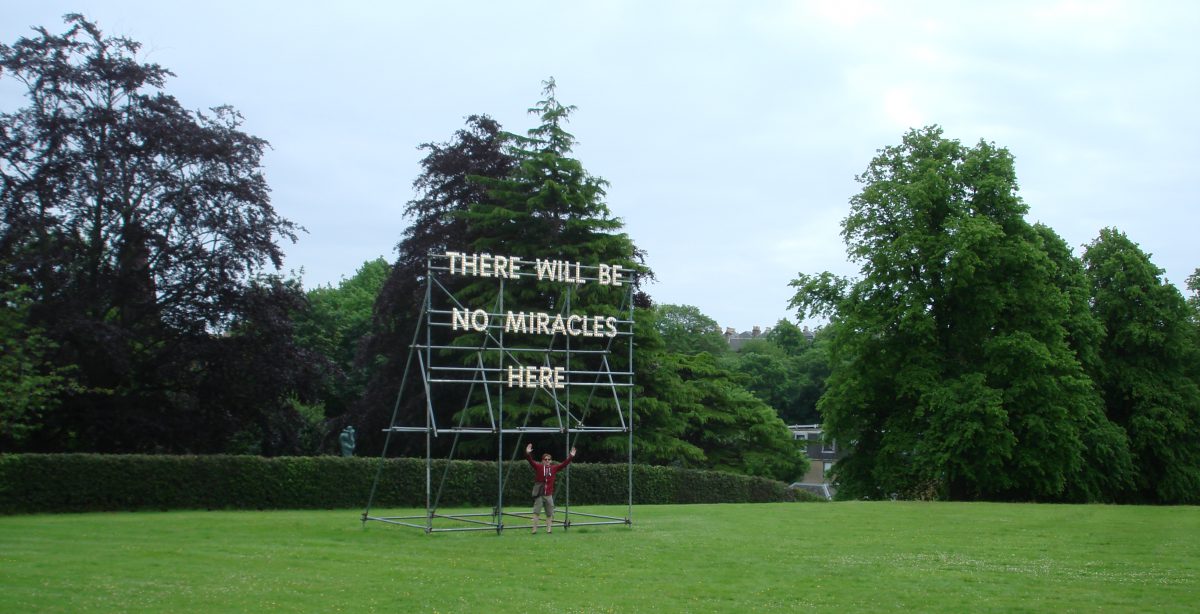
I have neither written nor posted a blog entry since writing about the Manchester International Festival. I wanted to let that experience rest at the top of my blog for quite some time because it proved, as always previously has been the case, in five prior MIFs, exceptionally stimulating, invigorating, rewarding–and immensely enjoyable. Nothing else I have done this summer even begins to approach MIF 2019 and our time in Manchester as a highlight. But I will turn nonetheless in the rest of this blog entry to describe and briefly comment on that rest, as well as what lies immediately ahead. I don't know that I have anything profound to write concerning any of this, but it is, after all, my blog, and I might just as well share what's been happening with me, even if I cannot readily convert this into a profound statement.
This past summer I spent considerable time early on reading intensively and extensively in preparation for my Fall 2019 semester classes, especially English 459 and 659, Seminar in British Literature After 1790 with my chosen focus ‘Disunited Kingdom–Intimations of Brexit'. I have been exploring this topic quite widely in terms of background, contexts, and perspectives, as well as reading through the specific fictional and non-fictional works we will directly engage together, within this seminar. Brexit certainly greatly (even, yes, gravely) concerns me, as does what is happening, intrinsically interconnected with struggles ostensibly focused on Brexit, to British society and in British politics. I wrote a course explanation statement as part of my English 459 and 659 syllabus which I knew would be quickly, at least in part, out of date, given the fact Brexit is an ongoing saga, a phenomenon of the present moment that is continuing to develop and transform in unpredictable ways in the immediate present. Yet I am nonetheless happy with this statement; I think it offers a helpful introduction and a clear articulation of a compelling position–one I am comfortable identifying with:
English 459 and 659: Disunited Kingdom–Intimations of Brexit, Fall 2019
This class I expect will fascinate me as we will engage together with a complex nexus of not only contemporary issues but also issues that have riven the only supposedly United Kingdom ever since the end of World War II, and, especially, ever since the end of the British Empire. We will engage with these issues in a prismatically mediated way–primarily through novels which anticipate and respond to Brexit, and to what Brexit signifies beyond itself alone, in a striking array of forms, styles, and directions (yet often especially tantalizing open-ended, elliptical, and opaque). I hope, as always, to learn a great deal more myself, together with my students–and, indeed, as a direct result of approaching a subject by teaching it and attempting to come to grips with it joined by a class of students.
That hope also certainly applies as well to my other two classes this upcoming semester: English 181: Making Sense of the Movies/Introduction to Critical Studies in Film, Television, and Moving-Image Culture (the latter is what the class has now actually become but the registration catalog takes awhile to update) and Writing 116: Blugold Seminar in Critical Reading and Writing–Sports, Politics, and Society. The former is, in essence, a new class, for me, and I am hopeful I have made considerable, substantial improvements since the only time I taught 181 in the last nine years, the Spring of 2017, when I felt constrained to teach a kind of class that did not feel authentic to me. I am genuinely excited about this English 181 class, and what opportunities lie ahead:
In Writing 116 I am working once again with a theme that has worked well for me, and for the students–Sports, Politics, and Society–although I have extensively updated the theme content, and am also working with a new textbook, Everyone's an Author. This should be a most exciting class to teach as well. I've enjoyed teaching the Blugold Seminar every semester I have taught it since the first one, when I was still feeling my way with it, and at that point as yet unsure how to connect the structure and aims of this course with whom I am, where I am coming from, and what I am about. That stopped being a problem from my second semester with the Blugold Seminar onward. Here's a link to the syllabus for my Fall 2019 Writing 116 class:
In both English 181 and Writing 116 I am working with a series of teaching assistants and that I expect will contribute an excellent dimension to the experience for all involved, as it so often has. I highly appreciate working with teaching assistants and have done so frequently in teaching many classes over a great many years. We met this past Friday morning and Friday afternoon, in two meetings, 181 in the morning and 116 in the afternoon, and I think we all are moving forward into the new semester with confidence and enthusiasm. At some point, perhaps, as useful, I will share not only the guidelines I prepare for my teaching assistants but also some of the other collaborative insights I have gained from doing this kind of work as often as I have. I am quite thorough in thinking this through, and continually doing so–quite ‘intentional' as used to be the common way to describe it. Each group of teaching assistants and I will meet once a week for an hour, beyond time in class, to review the past week's class meetings and plan for the next, as well as discuss how students are doing and ways to help them do all the better–we will discuss each and every student, in fact, individually, as well as the class as a whole. We discuss each individual student's engagement with the class every week in these meetings. I most sincerely aim to help my students, all of them, gain a valuable learning experience, and to do well, with the classes I teach; teaching assistants definitely often can and do help, a lot, in realizing these aspirations.
Because English 181 will meet for a total of five hours a week in class, while the same will be the case for Writing 116, I already will be meeting 13 hours a week in class–once we also include the three hours every Tuesday evening we will be meeting in class for English 459 and 659. Together with the two additional hours meeting with teaching assistants and two hours of scheduled office hours that's already 17 hours set, each week. Other regular commitments will include bi-weekly 1 and 1/2 hour long English Department meetings, periodic Department Personnel Committee meetings and more frequent Department Personnel Committee Executive Subcommittee meetings, Curriculum Committee meetings (where I will again this year serve as committee chair), and Department Chair Search and Screen committee meetings (as well as meetings with chair candidates once those are in place). Beyond that, our union, United Faculty and Academic Staff of UW-Eau Claire (for which I continue as Vice-President), will meet regularly as well as sponsor various events, including a ‘Know Your Rights' workshop for academic staff, and a new film series for which I am the principal organizer: ‘Empowerment Through Solidarity–a Progressive Film Series'. Here is a tentative outline:
EMPOWERMENT THROUGH SOLIDARITY: A PROGRESSIVE FILM SERIES Free and Open to the Public on the Campus of the University of Wisconsin-Eau Claire Sponsored by United Faculty and Academic Staff of UW-Eau Claire
1. Wednesday October 26: Nae Pasaran. 7:30-10 pm, Centennial 1916
The feature-length film tells the story of four Scotsmen who along with their workmates downed tools and refused to service and repair engines for the Chilean air force’s British-made Hawker Hunter planes. It explores just how significant their actions were in depriving the Chilean military dictatorship of much of its air power, contrary to the latter's claims at the time. Following Chile's return to democracy, three of the four Scotsmen were awarded the highest honour which the Chilean government can bestow on foreigners, during a 2015 ceremony in Glasgow by Chile's ambassador to the UK, Rolando Drago.
2. Wednesday November 20: Bisbee '17, 7:30-10 pm, Centennial 1916
Five years after its statehood and a few months after the United States' entry to the First World War, xenophobia and anti-unionism is growing in the Southernmost towns of Arizona near the Mexican border. In Bisbee, immigrant workers organized and were violently rounded up and transported to the desert in New Mexico; not as famous as the events in nearby Tombstone, the deportation didn't live in the national memory, but is quietly remembered by the townsfolk today. And so at the 100 year anniversary, Bisbee citizens organized a re-enactment. The events unfold again, as if they were happening in 2017, framed alongside interviews with the present day locals.
3. Wednesday February 26: Call Me Intern, 7:30-10 pm, Centennial 1916
Meet the millenials fighting back against unpaid work. Call Me Intern follows three interns-turned-activists who refuse to accept that young people should have to work for free to kickstart their careers. Their stories challenge youth stereotypes and help give a voice to the growing movement for intern rights across the world.
4. Wednesday March 18: UberLand, 7:30-10 pm, Centennial 1916
UberLand is a feature length documentary film that pulls back the curtain on the labor issues surrounding Uber and the gig economy. It’s the story of a scandal-ridden startup that upended transportation, defied regulators, decimated the taxi industry and ended up cannibalizing its own drivers. The film follows San Francisco Uber drivers Eric, Robin, Antonio and Xavier as these independent contractors navigate the gig economy where many workers have meager earnings and few labor protections. UberLand features interviews with workers and Silicon Valley thought leaders and asks us to consider the true cost of taking an Uber.
5. Wednesday April 15: Agents of Change, 7:30-10 pm, Centennial 1916
From the well-publicized events at San Francisco State in 1968 to the image of black students with guns emerging from the takeover of the student union at Cornell University in April, 1969, the struggle for a more relevant and meaningful education, including demands for black and ethnic studies programs, became a clarion call across the country in the late 1960's. Through the stories of these young men and women who were at the forefront of these efforts, Agents of Change examines the untold story of the racial conditions on college campuses and in the country that led to these protests. The film’s characters were caught at the crossroads of the civil rights, black power, and anti-Vietnam war movements at a pivotal time in America’s history. Today, over 45 years later, many of the same demands are surfacing in campus protests across the country, revealing how much work remains to be done.
6. Friday May 1: Union Time: Fighting for Workers' Rights, 7:30-10 pm, Centennial 1916
Union Time: Fighting for Workers’ Rights follows the story of workers at the Smithfield Pork Processing plant in Tar Heel, North Carolina, who fought for safe, fair working conditions – and won. It goes beyond hype about unions (from both sides) to show how people standing together can break the cycle of poverty and injustice. It also demonstrates the convergence of labor rights and civil rights, carrying on the legacy of Rev. Martin Luther King, Jr.
This schedule is tentative since I still need to confirm and make appropriate arrangements with some of the distributors, but even if it does not turn out quite like this line-up we have good options as back-ups. I think this is a most worthwhile focus for a film series sponsored by a labor union–and I hope we will get a decent turnout.
Another new commitment of mine this Fall 2019 semester involves efforts to create a National Alliance on Mental Illness (NAMI) student organization at UW-Eau Claire. I am pleased to be working with Barb Habben, Heather Britt, NAMI-Chippewa Valley, and NAMI-Wisconsin to attempt to start this student organization. NAMI does a vast amount of vital work on mental health issues and in helping people with mental health challenges, along with those who care about people who are close to them who face mental health challenges–while student organizations on other campuses have made important contributions to the lives of those directly participating in these clubs and toward broader well-being across these campuses. We definitely need this kind of contribution at UW-Eau Claire. I plan to serve as faculty advisor, and I am happy doing so because I expect this will amplify the impact of the work I already regularly attempt to do in the classes I teach and with my students in these classes, including being open concerning the fact I am a person who lives, and long has lived, with serious mental health challenges. Here are posters for the upcoming organizational meetings:
NAMI@UWEC Club Flyer 1 Fall 2019
NAMI@UWEC Club Flyer 2 Fall 2019
NAMI@UWEC Club Flyer 3 Fall 2019
NAMI@UWEC Club Flyer 4 Fall 2019
I remain faculty advisor as well for Progressive Students and Alumni, and will, as always, be happy to offer assistance and support as I can and as the students and alumni need; often this organization is quite effective in doing what those students and alumni involved need and want to do without me being all that extensively involved, but I am ready to help when and if I am needed.
Teaching usually requires a great deal of effort, many more hours in preparation for every hour spent in class, and many hours as well responding to and evaluating student work. Since I never decide how specifically we will organize and conduct any one class session until the last preceding one has finished, or at most a week in advance, and since I always read, screen, and listen to everything required of my students at the same time they are doing so (no matter how often I might have done so before), while also preparing to make many other connections and offer many other illustrations, it takes far more hours than many who have never done this kind of work would likely expect. This fall semester, just to offer one concrete example, each week I will be screening, for myself, the film(s), TV show episode(s), or stand-up comedy performance(s) we will then screen together in class, ahead of screening these in class, and then watch and listen once more all the way through together with my students in these screening sessions. And afterwards I will need to try to identify, rip, and prepare key clips to help with the focus of our discussion in two days' time. Teaching this coming Fall 2019 semester will be exciting and rewarding as well as challenging and exhausting, as always. It's an amazing job, and I cannot be more grateful to have spent now 35 years teaching and working as a university faculty member (or faculty member equivalent), including now 23 years doing so at UW-Eau Claire! Yet it definitely is not an easy job and I do often feel overwhelmed every semester and at repeated intervals by how much the job requires of me, while that impact only noticeably increases each semester as I grow older.
Institutional service along with teaching often leaves little time, and even less energy, for sustained scholarly work during fall and spring semesters which is unfortunate because I do find this kind of work most fulfilling and believe I have much to offer larger audiences. The kind of scholarship that most interests me also tends to be the kind that involves deep thinking, for long sustained periods, and which suffers by being displaced and compartmentalized as thoroughly as regular semesters demand. Nevertheless, this fall I also will do what I can in relation to scholarly projects–along with what many might not recognize as a routine requirement of being a professor, simply striving to keep up with work in fields of expertise and responsibility (all the more daunting given how many fields that is, for someone like me, working at the kind of institution UW-Eau Claire happens to be).
This summer I also spent considerable time and effort substantially rethinking and reconceiving both of my books in progress: Ian Curtis, The Myth and The Music–Critical Theoretical Perspectives and 21st Century British TV Detective Series: a Critical Guide. I have prepared a full-year sabbatical proposal, for 2020-2021, to make significant progress on both, which I will submit shortly. I am readier now to make these two books my overwhelming priority focus of attention and I am eager to make real headway with both. I hope I am given the chance. Nothing I can yet do in my career as a university professor strikes me as more important than writing these two books. I think of them as career-culminating works, and I would be content never to write another if I can and do manage to complete writing both of these, to my satisfaction, and to get both published.
Beyond what I have just mentioned I spent a great deal of time walking this summer, together with Andy and at other times by myself, for 2-4 hours at a time, quite widely about Eau Claire, including prompted by all of the construction to discover new routes about a city in which I have lived for now entering 23 years. I've loved doing this during these warm summer months, and I will miss doing so once classes start in just a few days and the weather grows cooler, but I will continue to walk, even on the treadmill at home while listening to lots of music. I do frequently envision myself upon retirement walking about the city in which I live and numerous other places we visit, up to 15 to 20 miles a day, virtually every day.
A small aside here. I am a person who has always identified summer as my favorite of the four seasons. And I am also the kind of man who likes to wear shorts, and who frequently does so, even when others find the temperature too cool, the weather otherwise too forbidding, or hesitate for yet many other possible reasons. I've come close to this ‘achievement' before, but I can here declare: I did not wear long trousers once throughout the months of May, June, July, or August of this year. I think my comfort wearing shorts perhaps has something to do as well with a punk background combined with being gay combined with being the kind of gay man who has long greatly enjoyed sports along with being the kind of person who prefers and identifies with a casual sense of style–even, perhaps, now and then, ‘smart casual', but casual nonetheless.
I have also been striving this summer to do quite a few stretching exercises, regularly as well, especially some precisely targeted stretching. Several years ago I discovered the cumulative impact of long-term chronic illness, in the form of repeated, often quite strong seizings up of muscles (and organs) in my abdominal region, had left me extremely tight along my left side and unable to raise my left arm and stretch it across the top of my head to the right without experiencing major amounts of discomfort–and, yes, real pain. I worked meticulously since then to address that problem, and have made impressive progress. My left side oblique muscles are stronger, looser, and much more flexible. This summer, however, I discovered the same challenge with my lower left abdominal muscles, and I am working to try to make similar progress getting those muscles back to where they need to be. It takes time, and patience, for sure, and in the meantime it can cause some real hardship when muscle cramps develop quickly and become quite brutal. I am working on it, though, and hope that, as need be, I can bear with it through the semester ahead whenever I face a difficult episode.
Earlier this summer I experimented for 28 days with a course of treatment that I thought might help address the source of my long-term chronic digestive disorder, but, unfortunately, after a brief promising start it amounted to nothing. I gave it much more than the 10-20 days recommended in order to realize demonstrable results. So I do not suffer from Small Intestinal Bacterial Overload, and, once again, what I struggle with remains a largely mysterious functional motility disorder. Yet, as has always been the case for 27 years now, I keep on seeking to find yet new and better ways not only to manage and counter the worst impacts but also to alleviate and reduce how often and how severe episodes can be. I am incredibly relentless with this, and few would recognize how much so because these are the kinds of health issues that are especially difficult to talk or write about and most people tend not to do so almost all of the time.
What with this chronic dysmotility disorder, a long-term severe abdominal muscle sprain/strain, epilepsy, and intrinsic tendencies toward especially anxiety but also depression too I know better than simply to expect or even hope for ‘good health' this semester. I just hope to be able to bear what comes and make it through. I maintain a great deal of experience doing just that so I am optimistic, however cautiously so. At the same time, though, as I am older, and definitely feel the effects of aging, which are, in turn, interdeterminately interconnected with chronic health and disability issues, I am going to aim, this fall semester, to refuse to feel guilty for not doing more than I am able, not to allow myself to fret over other people's expectations or even demands I do more than I am able, and to adhere to the necessary limits I set upon how much I attempt to do. I've typically done exactly the opposite, every single semester, for as long as I can remember. But it has taken too much of a toll to follow that pattern, and I don't want doing so to cause further damage because I want to live a rich and full life for a great many years yet to come.
As far as other focuses of life-activity, throughout this past summer, as has been the case for the vast majority of my life, I have spent many hours listening to music, and thinking about along with sensing and feeling in response to music. I also, as has been the case for now 15 years running, spend 15-20 hours each week preparing for and doing my weekly radio show, Insurgence, which is always a joy.
Related to my work on British television–and my absorption in exploring television, cinema, and moving-image culture–we routinely work our way through many TV crime series, and quite a few other shows regularly, including a lot of stand-up comedy and even, of late, ‘reality TV'. I always look forward to every day with Andy, and my most precious moments every day include meals with Andy, watching TV with Andy, walking and talking with Andy, and otherwise sharing experiences, large and small, routine and extraordinary, with Andy. Andy is the most loving person I have ever known and I love him absolutely always, tremendously, with everything I have to offer.
Our cats Jet and Star are entertaining enough, and definitely by now already long familiar and most welcome members of our family. Our dog, Casey, remains however, for me at least, exceptional versus these feline companions, because he is truly a great dog–and a real friend. Casey every day communicates to us in multiple ways it is simply great to be with us! He makes me happy, every day.
That may be a reasonable place to stop. Like so many of us I spend a lot of time every day deeply agitated by many terrible problems in our world today, and struggling to come up with ways I can help do yet more and better than I already am in helping strive usefully to tackle these terrible problems. I worry for the future of this planet, and for all life on it, and not just for the future of human life, human society, human culture, and human civilization. I worry about a great many more specific issues. I try to do something, however small, whenever and wherever and however I can. I dream of radical breakthroughs and great achievements, not by me alone, certainly not, and not even necessarily when I am yet alive. I get down, a lot, but I keep getting up, and keep finding hope, even when it seems exceedingly hard to credit. And I keep going because of the small happinesses that life so often still offers, day to day, such as the love I share with my wonderful husband, and the love we maintain together for our brilliant little dog, love he certainly always beautifully reciprocates in his own distinct way. Here he is, eight years ago–September 1, 2011:
